If You Dont Report a Rapist You Are Letting Them Rape Again
Why sexual attack survivors forget details
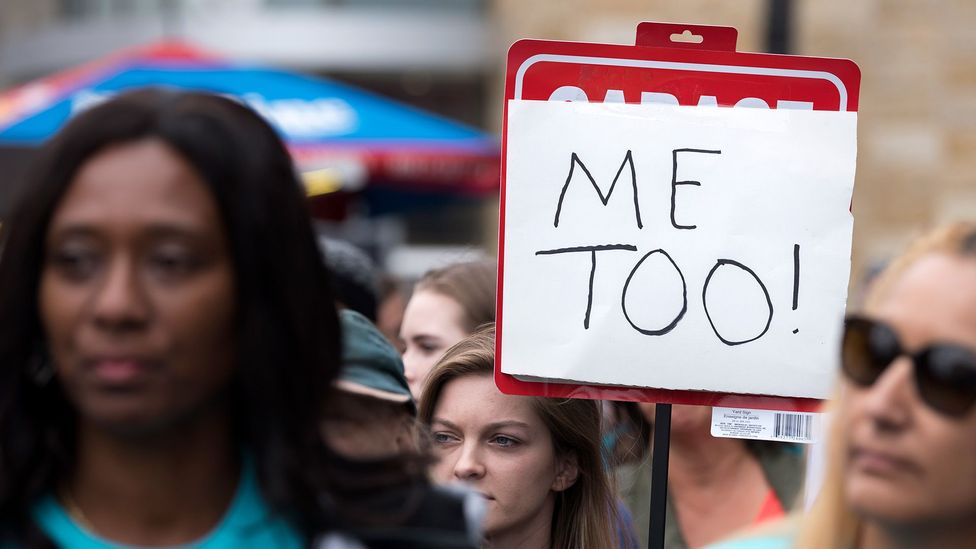
And four other misconceptions about sexual violence.
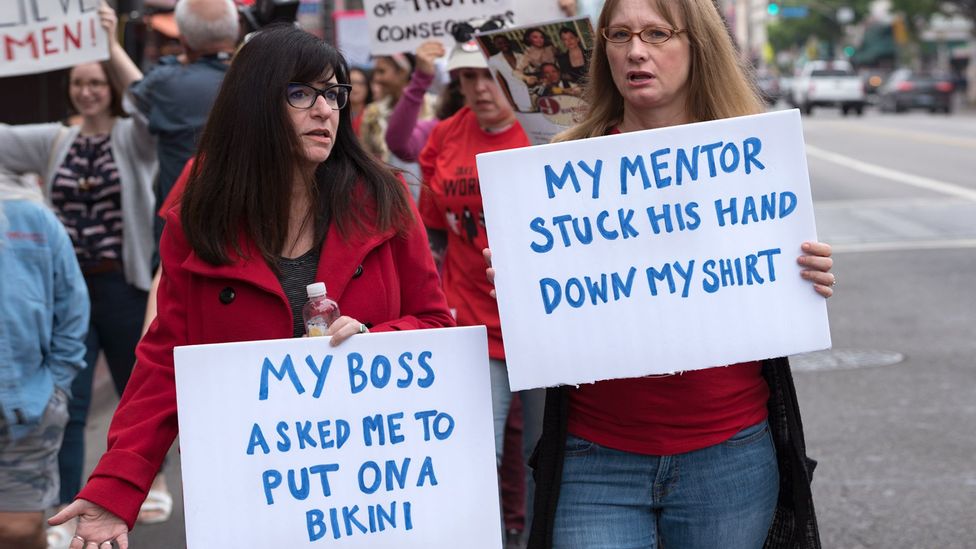
The majority of sexual assaults are committed past someone known to the victim (Credit: Getty)
But in the United kingdom, for example, a carve up report found that the perpetrator was a stranger in but 10% of rape and serious sexual assaults, while in 56% of cases it was the victim'southward partner, and for the remaining 33% it was a friend, acquaintance, or other family unit fellow member.
ii. A 'existent' sexual assault survivor always reports immediately
According to UK Home Office data, 46% of recorded rapes were reported on the day they took place – while 14% of people took more than six months to report that they'd been assaulted. If the victim was a child, they were even more likely to filibuster coming forward: just 28% of those aged under 16 reported the offence on the day it happened, while a third waited for longer than 6 months.
That is just for assaults that ultimately are reported. Many others are not. In the The states, for instance, studies have estimated that ii out of iii sexual assaults never are reported.

Studies have estimated that ii out of 3 sexual assaults go unreported (Credit: Getty)
There are many reasons why some people either filibuster reporting or never do, as testified to by the "#WhyIDidn'tReport" hashtag on Twitter. "A lot of people don't report because they don't want the perpetrator to get to prison: possibly they're in love with them, or it's a family fellow member, or it's a partner and are reliant on their income," says Nicole Westmarland, director of Durham Centre for Research into Violence and Abuse in the Britain. "Some other common reason I hear from students is that they don't want to ruin the remainder of the person'southward life."
However, "in that location is no show that suggests the timing of when y'all written report is linked to the genuineness of the report", she says.
3. If assaults were reported immediately, it would be relatively easy to investigate and printing charges
It is true that survivors of rapes and sexual assaults who come forrad quickly are more than likely to undergo a forensic medical examination, which involves taking swabs and samples from the body to identify the source of any semen, saliva, or DNA. Examiners too document injuries such as cuts, grazes or bruising, which could support allegations of force.
But undergoing a concrete examination doesn't necessarily mean an offender will exist caught and convicted, or even that the case will be investigated – equally demonstrated by the hundreds of thousands of rape kits that sit untested in police departments and forensic storage facilities across the The states. And concrete evidence tends to be less helpful if the person you're accusing is a partner or shut acquaintance. "Most cases these days don't come down to whether sexual intercourse happened – or forensic evidence of intercourse. They come up down to whether that intercourse was consensual or non," says Westmoreland.
According to U.k. Home Function data, 26% of rapes and serious sexual assaults reported on the same day resulted in someone being charged, dropping to xiv% once a day or more has elapsed. Those who reported the offence on the day it took place also had significantly higher odds of seeing their case get to court – although it fabricated less of a difference if the victim was under the historic period of 16. In the US, meanwhile, split reports take found that only 18% of reported rapes atomic number 82 to an arrest and ii% upshot in a conviction.
4. If you didn't 'actually' desire it, you'd fight dorsum
People vary in their response to rape and sexual attack. In her 2008 book, Series Survivors, the University of Wellington criminologist Jan Jordan describes the very different techniques employed past fifteen women who were sexually assaulted by the same man: some tried talking to him; others fought dorsum; notwithstanding others tried to mentally remove themselves from the state of affairs – a procedure psychologists refer to every bit 'dissociation'.
Another study, which examined 274 police reports from the US, found that only 22% of survivors resisted rape through fighting and screaming. The majority (56%) tried begging and pleading with their offender, while others reported feeling 'frozen with fright'. Unlike scenarios were more or less effective in different circumstances. Women who fought back, for example, were more probable to avert rape – only they also ran a college adventure of greater physical injury if a weapon was present. On the other hand, pleading, crying or reasoning with the perpetrator was associated with increased physical injury if the assault took place indoors and increased sexual corruption if ecology intervention (such as someone intruding) occurred.

One report found that fighting back or pleading during an assault can, in sure circumstances, raise the risk of physical injury or worsen the sexual corruption (Credit: Getty)
It is also important to recognise that people can't necessarily control their responses in such situations. Some enter a state of involuntary physical paralysis known as 'tonic inhibition' when confronted with an farthermost threat. A Swedish written report of 298 women who visited an emergency rape clinic within a month of having been sexually assaulted found that 70% reported significant tonic immobility and 48% reported extreme tonic immobility during the set on – and that those who experienced it were also more likely to develop postal service-traumatic stress disorder and astringent depression in the coming months.
5. Traumatic experiences scramble your memories: perchance you've misremembered what happened
Many people who have been raped or sexually assaulted often claim to have vivid memories of certain images, sounds and smells associated with the assail – even if happened decades earlier. Yet when asked to call back exactly what time of mean solar day it was, or who and what was where at whatsoever given time – the kinds of details police and prosecutors often focus on to plant the facts of a criminal offence – they may struggle or contradict themselves, undermining their testimony.
"There is this tragic discrepancy between what is expected within the criminal justice system and the nature of trauma memories and how people are probable to be reporting them," says Amy Hardy, a clinical psychologist at Kings College London.
This is because memories of traumatic events are laid down differently to everyday memories. Usually we encode what we see, hear, smell, taste and physically sense, every bit well every bit how that all slots together and what it means to us – and together, those different types of data together enable us to recall events as a coherent story. But during traumatic events our bodies are flooded with stress hormones. These encourage the brain to focus on the hither and now, at the expense of the bigger picture.

During traumatic events our bodies are flooded with stress hormones, encouraging the brain to focus on details (Credit: Getty)
This makes sense from an evolutionary perspective. "When we are nether threat, information technology is much better that we focus on what nosotros are experiencing, which triggers us into fight, flying or freeze-blazon responses, than to focus on the bigger meaning and making sense of it," says Hardy. "We besides know that if people dissociate during trauma – where the cerebral part of the encephalon shuts down and they go a bit spacey or numb – it exaggerates this fragmentation process, then their memories accept an fifty-fifty more here-and-now-blazon quality."
Hardy has examined the impact of these memory processes on survivors' experience of reporting sexual set on to the police. She constitute that those who reported higher levels of dissociation during the assault perceived their memories to be more than fragmented when interviewed by police and that those with greater levels of retentiveness fragmentation were more likely to feel that they had given an breathless account of what happened. And these factors, in turn, left them less likely to proceed with the legal example.
Join 900,000+ Time to come fans past liking us on Facebook , or follow the states on Twitter or Instagram .
If you liked this story, sign up for the weekly bbc.com features newsletter , called "If You Only Read six Things This Calendar week". A handpicked selection of stories from BBC Futurity, Civilisation, Uppercase, and Travel, delivered to your inbox every Fri.
reaganhatomentand58.blogspot.com
Source: https://www.bbc.com/future/article/20180926-myths-about-sexual-assault-and-rape-debunked
0 Response to "If You Dont Report a Rapist You Are Letting Them Rape Again"
Post a Comment